

There are places that don’t announce themselves, don’t compete for attention, don’t try to be anything other than what they are. They simply exist quietly—waiting for the right kind of person to notice.
LaTarnia Guest House is one of those places.
You don’t just arrive there—you settle into it.
From the moment we drove in, the land felt different, feels like a soft unraveling. Somewhere between the winding roads and the first glimpse of that blue door, I could feel something shifting.
Not in the world.
In me.
A Welcome That Felt Like Coming Home
When we arrived, Joseph met us on the porch.
I opened the door, and found Patty there, waiting with a hug that made me feel like I belonged here.
Because this isn’t a typical stay. You’re not renting a space. You’re stepping into someone’s life. And yet, it never feels intrusive.
There’s a private en suite just inside the front door, the blue door. From outside it’s simply a door, but inside that blue door starts to feel like a quiet threshold. Not dramatic. Not obvious. But a shift. A line between one kind of space and another, almost like a gateway. And then it seemed to lead to a place maybe you weren’t so sure you wanted to go back to. The en suite offered a place to retreat if you want it—but it’s hard to imagine choosing distance once you’ve sat down together.
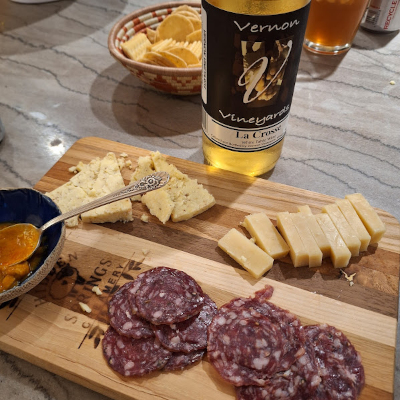
Upon our arrival Patty had already set out the most beautiful spread—cheeses and meats from Noble Rind, wine from Vernon Vineyards, beer chilling naturally outside in the cold air. Not because they were trying to impress us, but because hospitality is simply who they are.
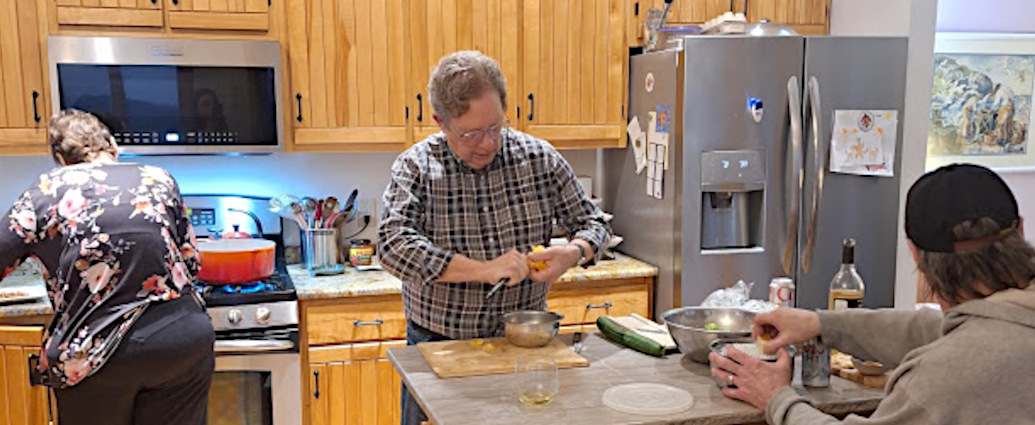
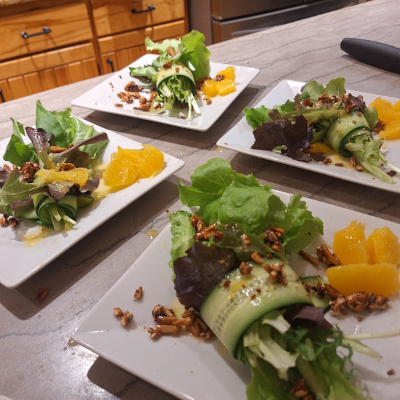
I watched my husband—who was so unsure about staying in someone’s home—slowly settle in. Walls dropping. Shoulders loosening. Before I knew it he was chopping brocoli, laughing with Joseph and genuienley enjoying the beautfully catered experience- but one that just felt easy, natural, like we were simply having dinner with friends.
 Trout Haven
This part of the Driftless is known—almost in a whisper—as a trout haven. Cold, clear streams thread through the land, drawing people who understand what it means to fish water that hasn’t been forced into place.
Joseph understood that long before he ever lived here. He came for the trout. For the rhythm of casting into something wild and honest. For the quiet that only exists where water and patience meet. At some point, he brought Patty with him—not to convince her, not to sell her on anything. Just to show her. She had never been out of the city, had never experienced the land, the bluffs, the stillness. Once was all it took to convince her this is where they needed to be, this was home. And then they found the lighthouse, as visitors often refer to it. Stan’ lighhouse. She looked around and said, we need to move here. Seventeen conversations later—give or take—that’s exactly what they did.
A House Built With Intention—and a Reminder for All of Us
The house they found wasn’t ordinary. Built by a man named Stan, it carries the nickname “The Lighthouse,” and the moment you see it, you understand why. A tower rises from the structure—not loudly, not dramatically—but with a kind of quiet certainty. Like it belongs there.
But the tower doesn’t reveal itself easily. You don’t reach it from inside. You step out onto the back porch, climb a ladder, and slip through a window to enter it. It feels less like accessing a room and more like being invited into a secret. The kind of detail that tells you this place wasn’t just built—it was imagined.
LaTarnia was built by Stan, a man who didn’t use nails to hold a single beam together. Everything—every board, every curve, every piece of furniture—was pegged, carved, placed with purpose. It’s the kind of craftsmanship the world doesn’t make time for anymore. Walking through that home, you can’t help but think: This is what it looks like when someone believes in the work of their own hands.
When Joseph and Patty moved in, they found Stan’s original drawings—coffee stains, scribbled notes, the marks of long nights and honest effort. They were asked if they wanted it restored. Patty said no. She wanted it preserved as it was. Truthful. Human. Whole. And isn’t that what the “power of self” really is? Not polishing ourselves into perfection—but honoring the story that got us here.
 The People Who Live There—and the Kind of Love That Teaches You Something
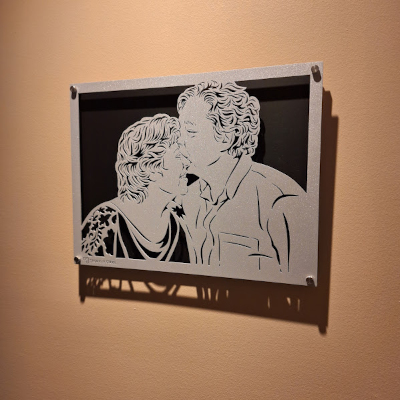
Joseph and Patty aren’t married, but if you didn’t know that, you’d never guess. They move around each other with a soft, lived-in ease that some married couples never find.
He cooks. She bakes. She won’t cook, she doesn’t need to.
He makes her coffee every morning because he wants to, not because he’s supposed to. And when he leans in to hug her first thing in the morning… .It’s not a performance. It’s not for anyone else to see. It’s just how their day begins. It just needs truth.
Being with them reminded me that real connection doesn’t come from doing everything right. It comes from showing up exactly as you are—and letting someone else do the same.
Lessons From the Land—and the Man Who Understands It
Joseph is a wealth of knowledge about everything around LaTarnia. He told us the bluffs are actually the same height—it’s the land that changes around them. Think about that. Sometimes what looks like inconsistency isn’t change at all. Sometimes you are steady. It’s just the world around you shifting shape. That one stuck with me.
He teaches cooking classes—meals that taste five-star but are simple enough to make with your kids. He teaches fly fishing too, in the same waters that drew him here in the first place. There’s such power in that—sharing the things that ground you.
The Sauna: Where I Found Myself Again
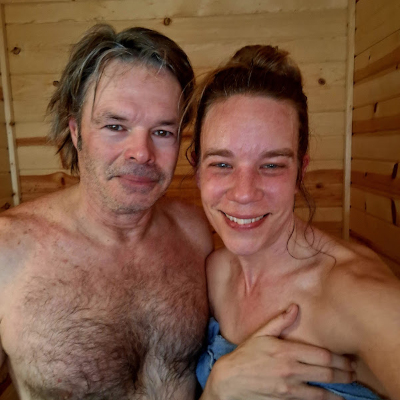
And then there’s the sauna. Or, as you’ll gently be corrected, sow-na.
It begins simply enough. Dry heat. A slow build. Muscles loosening before you even realize it’s happening. Then water hits the stones. Steam rises, thick and immediate, wrapping around you in a way that feels almost alive. The air shifts. Your body responds. Your thoughts begin to quiet. At some point, you stop tracking time.
I leaned back, closed my eyes, and just listened. And for the first time in a long time… I heard me… The steady thrum of my heartbeat. My breath moving in and out. The heat drawing everything I’d been holding right out of me. Sweat rolled down my skin like tiny rivers, and I let it all go—stress, tension, the weight I didn’t even realize I was carrying. Release.
The heat can climb toward 180 degrees, sharp enough to burn your nostriles if you breath in to sharply, to remind you that you’re still there, still inside your body. But your mind drifts somewhere quieter. It wasn’t just relaxing. It was transformational.
There I found me again- in the quiet, in the heat, in the moment. I found that when you finally stop running from your own reflection and start focusing on what’s inside- you find what needs to come out and what needs to be nurtured again.
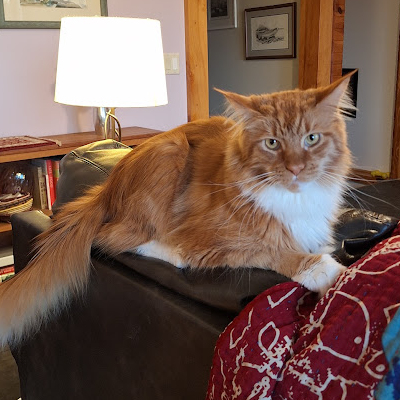
And then, of course, there’s Hobbs.
Four years old. Twenty-seven pounds. A purebred Maine Coon with a presence that doesn’t ask for attention—it assumes it. He is, without question, the master of the house. Smart enough to learn tricks, confident enough to perform them, and entirely aware of both. Joseph shows them off with a kind of quiet pride that feels less like showing off and more like sharing something he genuinely enjoys. At night, Hobbs claims his place on Joseph’s legs. No debate. No negotiation. Just a quiet understanding of who really runs things.
A Place Unlike Any Other
What surprised me most wasn’t the house. Or the craftsmanship. Or even the experience. It was how quickly it all felt familiar. My husband came into the trip unsure. It’s not traditional—to stay in someone’s home, to share space with people you’ve just met. There’s a vulnerability to that. But that feeling didn’t last. Because nothing about LaTarnia feels transactional. It feels relational. By the time we left, it didn’t feel like we were leaving a place. It felt like we were saying goodbye to old friends.
It’s not just the architecture—though that alone would be enough. It’s not just the land, or the trout streams, or the craftsmanship held together without nails.
It’s the layering of intention.
A fisherman who followed water to a place that felt right. A woman who saw a life there before it existed. A craftsman who built something meant to last—and still lives beside it. A home where coffee is made every morning without fail. Where food is shared simply and well. Where even the quiet moments carry weight.
Nothing is accidental. Everything is curated and when you leave, that’s what stays with you. Not just the tower. Not the stone. Not even the stories. Just the unmistakable feeling that somewhere in the Driftless, there is a place where life is being lived exactly the way it’s meant to be—slow, intentional, and deeply, undeniably real.
By Stephanie Campbell